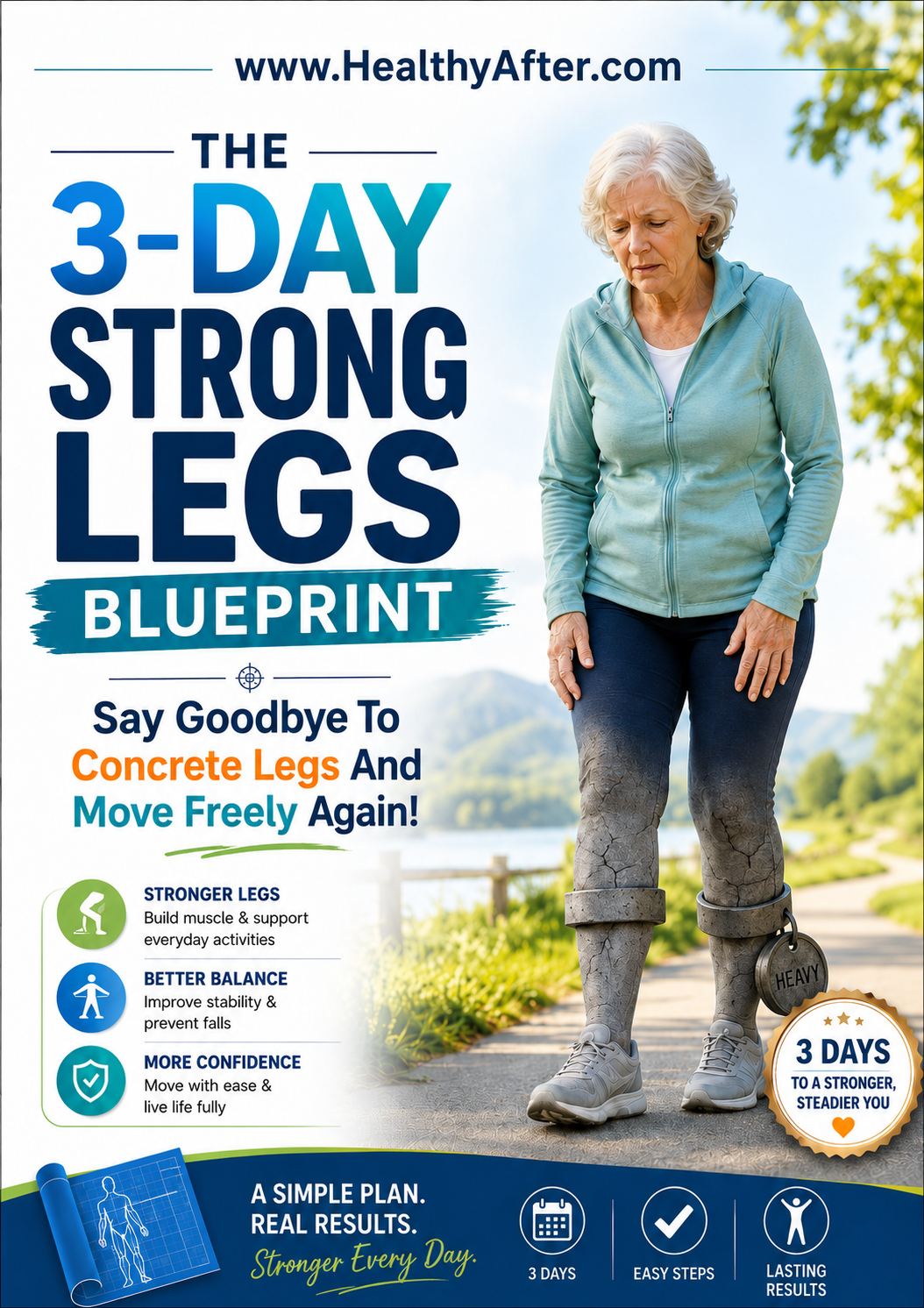
Legs Like Concrete
If Your Legs Feel Like They're Wading Through Wet Cement By The End Of The Day… Read This First.
Maybe you've started noticing it without ever saying it out loud.
You take a breath before the stairs now. You look for a bench halfway through the shops. You let the dog walk get a little shorter. Your legs feel fine sitting down — it's the getting up and going that costs you. By evening they feel heavy, dead, like they belong to someone else.
And you tell yourself the same thing my dad told me:
"My legs are just tired. I've earned a slow pace."
If that sounds like you, then this story is about you as much as it's about him. Because I'm a personal trainer… and I watched my own father quietly negotiate with his own legs for two years before I understood what was really going on.
Here's What I Didn't Understand Until I Watched It Happen To Him.
My dad didn't wake up one day with heavy legs.
It crept in the way it does for almost everyone — one quiet surrender at a time, over months, while all of us (including me, the trainer) called it "just slowing down."
The pause at the bottom of the stairs. The chair he started choosing nearest the door. The way he'd wave us on ahead — "you go, I'll catch up" — when he never used to. The walk to the mailbox that somehow became a decision instead of a habit. Each one looked like nothing on its own. Together, they were a countdown.
And when you're the one living it, it doesn't feel like decline. It feels reasonable. You're just conserving energy. Being sensible.
That's exactly what makes it so easy to ignore.
Because the goal was never just "less tired legs." It was being able to trust your own legs to carry you wherever you decided to go — without checking first whether they'd make it.
And If You're Reading This, You Already Know The Feeling.
Once I started paying attention, I heard the same quiet things from hundreds of people who could be you:
"My legs feel like lead by the afternoon."
"I can do it — I just need to sit down halfway."
"Stairs have become the enemy."
"I don't feel old until I have to walk any real distance."
And the one that sounded most like the fear underneath my dad's:
"I don't want to become a burden to my kids."
You're not imagining it, and you're not being dramatic. Your legs are trying to tell you something — and the fact that you're looking into it now, instead of just sitting down more, is the whole advantage.
When I Tried To Help Him, I Did What Every Trainer Does First.
I looked at his leg strength.
That's what everyone does. We assume heavy, tired legs are weak legs. So the advice is always some version of:
- do more leg exercises
- walk more
- push through the tiredness
- build the muscle back
- just keep moving
And I watched it backfire.
The more I pushed him to "just walk more," the more wiped out he got — and the more he dreaded going. He'd do the leg work and his legs still felt like concrete the next morning. He stayed active and still had to sit halfway through anything that mattered.
I was missing something, and it was costing him the one thing he wanted most: to go where he wanted, when he wanted, without rationing his own legs.
So I Went Hunting For The Answer I Should Have Had Years Earlier.
I dug into everything — circulation, leg fatigue, the calf muscle pump, blood flow after 60, senior conditioning, the deep mechanics of why legs feel heavy instead of just weak.
I spent just over $3,900 on courses, certifications, and books. I filled 6 notebooks. I tested 58 different approaches — on myself first, then with the older adults I work with.
And I held every one up against a single question:
"Would this have actually helped my dad — before his world shrank to the length of one short walk?"
Almost every time, the honest answer was no. The advice was built for tired muscles, not heavy legs — and they are not the same problem. None of it was made for the person who can manage one flight of stairs but pays for it all evening — the person who wants to stay independent but is scared that pushing harder will just wear them out faster.
In other words: none of it was built for someone like him. Or someone like you.
Then One Simple Test Showed Me What I'd Been Missing.
I stopped asking "How do I make his legs stronger?" and started asking a better question — the one this whole story turns on:
"Are his legs actually weak… or are they just not getting the blood flow they need to feel light?"
There's a simple check that tells the difference. You can do it right now, sitting where you are.
The 30-Second Heavy-Leg Check
- Sit in a chair with both feet flat on the floor.
- Keeping your heels down, lift the front of both feet up toward you (toes to the ceiling), then press them back down.
- Now reverse it — keep your toes down and lift both heels up as high as they'll go, like a calf raise sitting down.
- Do this — toes up, heels up — slowly, for 30 seconds.
- Stop and notice: did your calves start to burn, tighten, or feel tired well before the 30 seconds were up?
This is a gentle self-check, not a diagnosis. If you have swelling, pain, numbness, or any circulation condition, please speak with your doctor before doing leg exercises.
Here's the key, and it changes everything: if your legs felt heavy or tired from 30 seconds of sitting-down movement, that's almost never a strength problem. Strong legs don't fatigue from that. What you felt was the calf pump — the muscles that are supposed to push blood back up your legs — struggling to do their job.
And That's When It Finally Hit Me.
Everyone treats heavy legs after 60 like weak legs. They usually aren't.
Here's what most people never learn. Your legs don't just carry you — they pump. Every step you take, your calf muscles squeeze the blood back up toward your heart. After 60, with more sitting and less movement, that pump gets sluggish. Blood and fluid pool in your lower legs. And that — not weak muscle — is what makes legs feel heavy, dead, and tired by afternoon. You can have perfectly capable legs that feel like concrete, simply because the pump underneath them has gone quiet.
That was the realization I'd spent $3,900 and 6 notebooks chasing:
My dad's legs were never "going." They were under-circulated, under-pumped, and full of the heaviness that comes when blood sits instead of moves — and all of that is fixable.
The lead-heavy afternoons, the stairs you brace for, the bench you scout halfway through — those usually aren't legs that are finished. They're legs whose pump switched off. And a pump can be switched back on — in the right order.
The System I Built — The One I Wish He'd Had
The breakthrough wasn't pushing harder. It was order.
Most leg advice starts in the wrong place. It piles on strength work before the circulation is moving — so you just get more tired. It says "walk more" to legs that can't yet carry the walk. It treats the muscle and ignores the pump.
That's backwards. So I built it the right way around:
Wake Up The Calf Pump
Simple seated and supported movements that get the calf muscles pushing blood back up your legs again — so the heaviness starts to lift before you ask the legs to do anything hard.
Get The Blood Moving
Gentle circulation-focused movement that clears the pooled, heavy feeling and gets fresh blood flowing through legs that have been sitting too still.
Rebuild Everyday Stamina
Once the legs feel lighter, simple supported practice helps them carry you through real daily life again — stairs, walks, standing, errands — without rationing or bracing.
Wake the pump. Move the blood. Rebuild the stamina.
The right things, in the right order.
Why This Matters So Much After 60
Heavy legs rarely take over all at once. They creep in through small surrenders — the same ones you might already be making.
The breath before the stairs. The bench you scout halfway through the shops. The "you go ahead, I'll catch up." The walk you talk yourself out of because your legs already feel spent. Smaller outings, because your legs just don't feel as reliable as they used to.
One surrender at a time, those become your new normal. And you stop asking "Can I get this back?" and start saying "I just don't have the legs for it anymore" — the exact thing my dad used to say.
But you don't want your world to keep shrinking to the length of one short walk. You don't want to plan your day around how far your legs will carry you. And you don't want to become a burden to the kids you spent your life taking care of.
Heavy legs don't just steal your distance. They steal your confidence first — and that's the part you can start protecting today, while you still have the head start he didn't.
That's the whole reason I put this together: a system that starts gentle, makes sense, and meets you exactly where you are.

The 3-Day Strong Legs Blueprint
The 3-Day Strong Legs Blueprint

The Strong Legs Recovery Kit Includes:
You get the simple roadmap, the daily movements, the at-home check, and the expanded habit guide — so you are never left guessing what to do next.
The 3-Day Strong Legs Blueprint
A simple day-by-day starting plan made for adults 60+ who want lighter, stronger legs that carry them through the day at home.
The 3-Step Strong Legs System
Follow the right order: wake up the calf pump, get the blood moving so the heaviness lifts, then rebuild the everyday stamina that carries you through stairs, walks, and errands.
The 30-Second Heavy-Leg Check
A simple seated check that shows you whether your legs are truly weak — or just under-circulated — so you start in the right place instead of pushing harder and getting more tired.
Chair & Supported Options
Begin seated and supported so you are never pushed into movements that wear you out. Every step has a gentler version.
Beginner-Friendly Movements
No gym, no machines, no exhausting workouts. These are simple movements you can do in the space you already have.
Clear Daily Instructions
Know exactly what to focus on for Day 1, Day 2, and Day 3 — without piecing together random advice online.
"What To Do If Your Legs Feel Heavy" Safety Notes
Simple reminders for how to ease off, use support, and when to check with your doctor about swelling, pain, or circulation.
Daily Practice Tracker
A simple way to keep track of your practice so you stay consistent without overthinking it.
Bonus: 100 Small Leg Habits I Wish I Knew Sooner
The expanded habit guide gives you 100 simple leg-supporting ideas you can work into normal daily moments — sitting at the table, standing at the counter, watching TV, walking to the mailbox. Instead of guessing what to try next, you'll have a full menu of small, beginner-friendly habits organized by situation.
This Blueprint Is For You If…
- Your legs feel heavy or like concrete by the afternoon.
- You take a breath before the stairs without noticing it.
- You scout for a bench halfway through the shops.
- You've started letting your walks get shorter.
- You've caught yourself saying "you go ahead, I'll catch up."
- You want gentle movements that don't wear you out.
- You'd rather start at home before trying anything advanced.
Real Results From Real Members
What Adults Over 60 Are Saying
4.6 out of 5 · 4,371 verified reviews · 23,000+ members
By afternoon my legs used to feel like lead and I'd have to put them up. After a few days of the Day 1 moves, that heavy feeling lifts. I made it round the whole supermarket without scouting for a bench.
Margaret W. · Age 72 · ✓ Verified Purchase
The part about the calf pump finally explained it. I wasn't weak — the blood just wasn't moving. Doing it in order made all the difference.
Raymond M. · Age 74 · ✓ Verified Purchase
Stairs were becoming the enemy. My daughter noticed I stopped pausing at the bottom before I did. That meant more to me than I can say.
Joan T. · Age 71 · ✓ Verified Purchase
I was skeptical — I've wasted money before. But this is gentle and I can do it in my chair. My legs don't feel like concrete by dinner anymore.
David K. · Age 66 · ✓ Verified Purchase
I live alone, so my legs getting me around is everything. I feel steadier and lighter on my feet than I have in two years.
Patricia E. · Age 77 · ✓ Verified Purchase
The Shift Most Members Notice
From Rationing Your Legs To Trusting Them Again
Before
- Legs like lead by afternoon
- A breath before every staircase
- Scouting for a bench halfway
- "You go ahead, I'll catch up"
- Talking yourself out of the walk
After
- Lighter legs that last the day
- Taking the stairs without bracing
- Walking the distance without sitting
- Keeping pace with the people you love
- Going where you want, when you want