Pro Health Tip

Roll your shoulder BACK in slow circles for 30 seconds. (Most people roll forward which makes posture worse).

15 Things Women Over 60 Start Doing Once Little Leaks Become a Daily Issue

15 Things Women Over 60 Start Doing Once Little Leaks Become a Daily Issue

15 Things Women Over 60 Start Doing Once Little Leaks Become a Daily Issue

We all reach a point where those little leaks start quietly running the show. You don’t necessarily talk about it, but your daily decisions begin to change in small ways that add up. Here are 15 things I started doing (and yes, I didn’t even realize I was doing some of them until a friend pointed it out).

1. Scouting bathrooms the second you walk into any building

You enter a new store or restaurant and your eyes immediately scan for the restroom sign before even looking at the menu. The tension of not knowing where it is creates instant low-level anxiety that takes the joy out of just being out.

2. Declining last-minute invitations with vague excuses

When your neighbor texts about a spontaneous afternoon tea, you find yourself typing “maybe next time” because the unpredictability of the timing feels too risky. The isolation creeps in slowly as your social world gets smaller.

3. Wearing only black or navy pants, even to summer events

You pass up the pretty floral trousers because any accident would be too visible. The constant clothing restriction starts chipping away at your sense of style and confidence in your appearance.

4. Sitting on the edge of your seat during long car rides

Even with a pad, you perch rather than relax into the seat, constantly aware of every bump. The journey that should be peaceful becomes a tense calculation of how long you can hold on.

5. Planning entire outings around bathroom proximity

Before agreeing to any activity, you mentally map out the nearest facilities. This constant mental planning steals the freedom you used to feel when you simply went out and enjoyed the moment.

6. Avoiding anything fizzy or caffeinated after midday

You love your morning coffee but switch to water by lunch because you know what those drinks do later. The small daily sacrifices start to feel like you’re punishing yourself for something that isn’t your fault.

7. Keeping spare underwear and wipes in every handbag and car

You never leave home without your “just in case” kit. The weight of always being prepared for an accident creates a quiet emotional burden that pads and liners never truly lift.

8. Adjusting your posture every few minutes while sitting

During book club or a movie, you find yourself shifting constantly. The discomfort and fear of a leak happening right there makes it hard to focus on anything else, turning enjoyable activities into ordeals.

9. Choosing aisle seats in theaters, churches, and planes

You arrive early to every event to secure the escape route seat. The tension of being trapped in the middle of a row with no easy exit creates anxiety that prevents you from fully relaxing and enjoying the experience.

10. Hesitating before laughing fully at funny stories

Even with friends, you hold back big genuine laughs because you know what can happen. That self-editing takes the pure joy out of connection and makes you feel disconnected from your own spontaneity.

11. Taking “just in case” bathroom trips even when you don’t feel urgency

You go before leaving any location whether you need to or not. This hyper-vigilance becomes exhausting and reminds you constantly that your body isn’t cooperating like it used to.

12. Avoiding bright colored furniture at home

You hesitate to buy that beautiful cream-colored chair you love because the fear of an accident ruining it is too real. Your home environment starts reflecting your restrictions instead of your taste.

13. Measuring success of an outing by whether you stayed dry

Instead of enjoying the conversation or scenery, you rate the day based on whether you had any leaks. The emotional tension of this constant scorecard steals the pleasure from simple daily freedoms.

14. Wearing two pads “just to be safe” for longer events

You layer protection for anything longer than a couple of hours, feeling bulky and uncomfortable. The realization that even double protection often isn’t enough creates deep frustration with current options.

15. Canceling plans when the weather is bad

Rain or cold makes you more likely to stay home because getting caught out feels too overwhelming. The way little leaks slowly shrink your world is something many of us recognize but rarely say out loud.

There’s a difference between managing it and actually feeling comfortable again. Most of what’s available just helps you cope with the worry instead of removing it. This is where finding something designed to actually handle little leaks properly starts to matter.

Below is what I ended up trying after realizing I didn’t want to keep living with this constant tension and planning. The peace of mind is something I didn’t know I could have again.

Many people assume this is simply part of getting older. But often, the real issue is the shoulders slowly pulling everything forward over time. That’s why so many people begin looking older, weaker, and more tired than they actually feel.

Pro Health Tip

Place your phone at eye level for 2 minutes.

👉 You’ll feel how much your neck normally collapses.

As Seen On

As Seen On

As Seen On

As Seen On

As Seen On

As Seen On

As Seen On

As Seen On

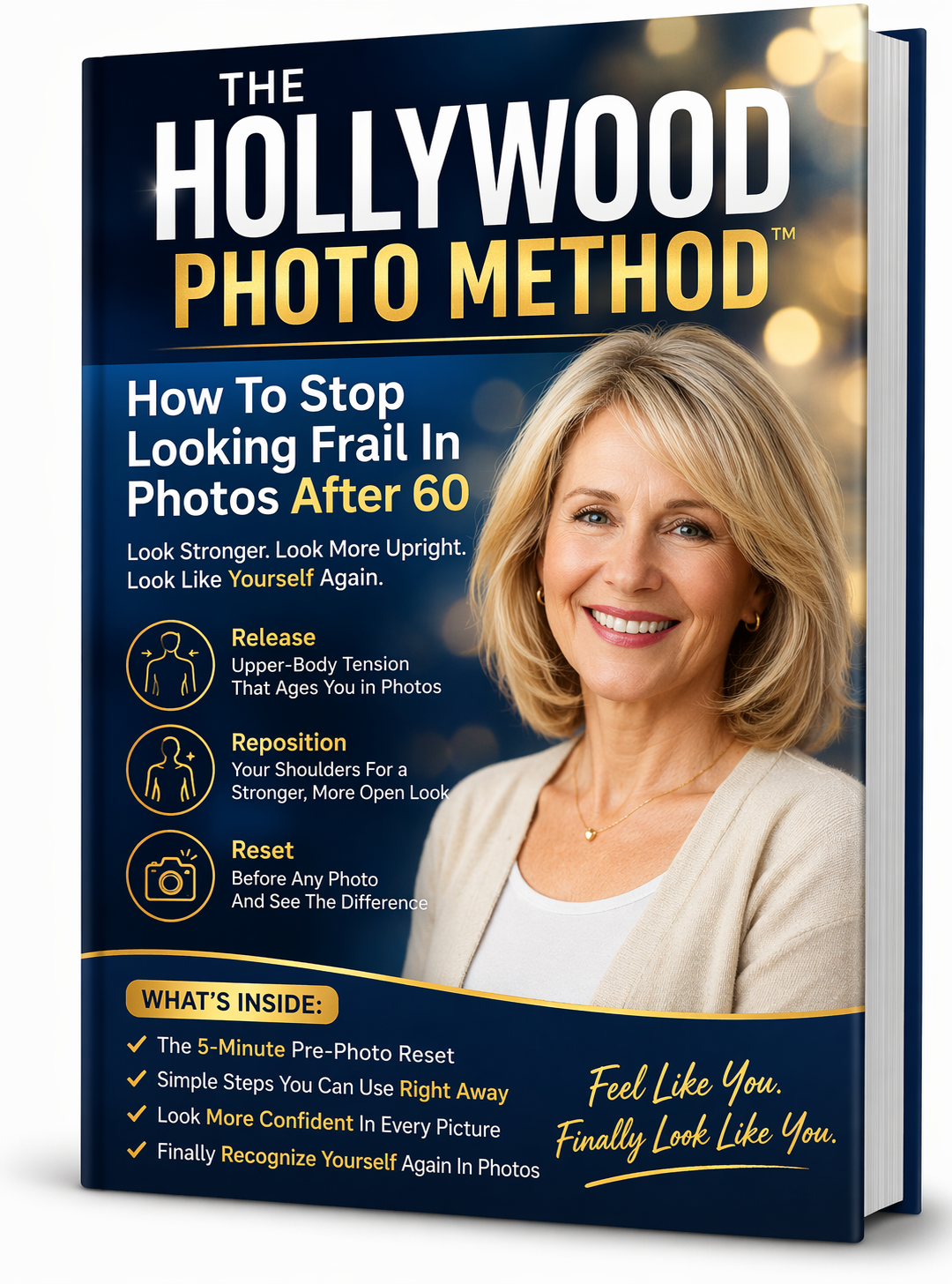
“How To Stop Looking Frail In Photos After 60”

The simple Hollywood Photo Method™ that helps you look stronger, more upright, and more like yourself again

If you’ve ever looked at a photo of yourself and thought,

“I don’t feel this old… so why do I look like that?”

It’s a strange feeling.

You still feel like yourself.

You’re still living your life. You’re still doing normal things. You don’t walk around thinking of yourself as frail.

And then someone takes a picture.

Suddenly you look smaller. More tired. More worn down. Maybe even weaker than you feel inside.

Most women assume that means it’s just age.

So they do what most people do. They blame the angle. They blame the camera. They blame the lighting. They try smiling differently. Standing differently. Dressing differently.

But the photos still don’t look right.

What most women don’t realize is that the “frail look” often doesn’t start with their face at all.

It usually starts higher up in the body.

Tiny changes in the way the shoulders sit. Tension in the upper body. The chest closing in a little. The neck shortening. The whole frame subtly collapsing inward over time.

In real life, movement softens a lot of that.

But a photo freezes it.

And the camera can make those small shifts look much bigger than they really are.

That’s why you can feel completely normal in the mirror… and then look at a candid photo and wonder who that woman is.

Why most women never fix it

Because they’re trying to solve it from the outside in.

They focus on makeup. Clothes. Weight. Better camera angles. Better expressions.

But they never address the subtle upper-body positioning that is quietly changing how they show up in pictures.

That’s the reason I put together the Hollywood Photo Method™.

Not to make women look fake. Not to make them pose like someone they’re not. And not to chase some impossible “look younger overnight” fantasy.

The point of this method is much simpler than that.

It helps you stop looking weaker, smaller, and more worn down than you really are.

It shows you how to reset the parts of your body that most strongly affect how you read on camera — so you look more open, more balanced, and more like yourself again.

What the method helps you do

  • Understand why photos can make you look frailer than you really are
  • Recognize the upper-body tension patterns that change how you appear on camera
  • Reset your shoulders and upper frame before a photo is taken
  • Look more upright and open without stiff “good posture” forcing
  • Stop looking so tired, collapsed, or closed off in candid pictures
  • Feel more confident the next time someone pulls out a camera

This isn’t about pretending to be someone else.

It’s about no longer feeling surprised or disappointed every time you see yourself in a photo.

It’s about finally seeing a version of yourself that actually matches how you still feel inside.

I didn’t figure this out right away

I went through the same cycle most people do.

I thought it was just bad photos at first.

Then I thought maybe it was lighting. Or angles. Or maybe I just needed to “try harder” to look better.

I even caught myself standing differently before pictures… forcing my posture… holding my breath… trying to “fix it” in the moment.

And somehow that made it worse.

Because it didn’t feel natural. And it didn’t actually change what the camera was picking up.

The shift that changed everything

The moment things started to change was when I stopped trying to fix the photo…

…and started fixing what the camera was actually seeing.

That’s the entire idea behind this.

Once you understand what’s really creating that “frail” look…

it becomes surprisingly simple to change it.

Not perfectly. Not dramatically. But enough that you finally stop feeling that disconnect when you see yourself in photos.

Inside the Hollywood Photo Method™, I walk you through:

  • The exact reason your body can look weaker on camera than it feels in real life
  • How subtle shoulder positioning quietly changes your entire appearance
  • The upper-body tension pattern that makes you look more tired than you are
  • A simple reset you can do in under a minute before any photo
  • Why “standing up straight” often backfires (and what works instead)
  • How to look more open and balanced without forcing anything
  • The small shift that helps you look more confident instantly
  • What makes some people naturally photograph better than others
  • How to stop overthinking every picture
  • And how to finally feel comfortable when someone pulls out a camera

This isn’t about trying to look younger.

It’s about not looking weaker, smaller, or more worn down than you actually are.

Why I made this simple

You don’t need a complicated system for this.

You don’t need to spend months fixing posture or learning how to pose like a model.

And you definitely don’t need to avoid photos altogether.

You just need to understand what actually makes the difference — and apply it in a simple, natural way.

Get Instant Access

The Hollywood Photo Method™

$19

Instant access. Simple to follow. No complicated steps.

If it doesn’t help you feel more confident seeing yourself in photos, you don’t have to keep it.

At the end of the day, this isn’t really about photos.

It’s about that moment when you see yourself and think,

“That actually looks like me.”

And not feeling like you have to hide from the camera anymore.