Pro Health Tip

Roll your shoulder BACK in slow circles for 30 seconds. (Most people roll forward which makes posture worse).

15 Everyday Moments That Make You Feel Weak & Limited Because of Shoulder Pain After 60

15 Everyday Moments That Make You Feel Weak & Limited Because of Shoulder Pain After 60

15 Everyday Moments That Make You Feel Weak & Limited Because of Shoulder Pain After 60

If you’re over 60 and simple movements leave you feeling weak, frustrated, or embarrassed, these moments might be quietly damaging your rotator cuff and stealing your independence. Here are 15 common situations and what to do about them.

1. Reaching for something on a high shelf

You stretch for the cereal box and suddenly feel that sharp pull. It makes you feel old and helpless, like your body is betraying you. The hidden cause is often years of poor shoulder mechanics and tightness in the rotator cuff muscles. Try rolling your shoulders back and gently reaching with your palm facing up instead of forcing the motion.

2. Pulling a shirt or sweater over your head

Getting dressed in the morning turns into a painful struggle. You feel frustrated and limited, like even basic tasks are too much now. This usually comes from inflamed rotator cuff tendons that get pinched when arms go overhead. Start by threading the painful arm through first while keeping your shoulder relaxed and avoiding sudden yanks.

3. Rolling over in bed and feeling sharp pain

You wake up in the middle of the night clutching your shoulder. The discomfort leaves you drained and worried you’ll never sleep well again. Sleeping directly on an inflamed shoulder compresses the joint. Try placing a pillow between your arms or sleeping on your back with a small pillow under each arm to keep them supported.

4. Brushing or styling your hair

Raising your arms to brush your hair makes you feel self-conscious and weak. You avoid looking in the mirror too long. Tightness in the front of the shoulders from years of desk work or driving is often the culprit. Do gentle wall slides: stand with your back to a wall and slowly slide your hands upward only as far as comfortable.

5. Reaching behind to fasten a bra or belt

Struggling to reach behind your back leaves you embarrassed and needing help. It makes you feel old before your time. This motion strains the rotator cuff in a different direction. Practice gentle behind-the-back reaches using a towel: hold it with both hands and gently pull up and down like a sawing motion to improve mobility.

6. Lifting grocery bags from the car

You hesitate before grabbing the bags, feeling a wave of weakness and fear that something will tear. The hidden cause is often weak stabilizing muscles around the shoulder blade. Carry bags close to your body and lead with your elbows instead of letting the weight pull your shoulders forward.

7. Putting on a seatbelt

Reaching across your body to grab the seatbelt sends a jolt of pain. You feel limited and angry at how such a small thing has become difficult. Rotator cuff strain from repetitive forward movements is usually to blame. Try turning your whole torso toward the buckle instead of just twisting your arm.

8. Reaching up to change a light bulb

Standing on a step stool with arms overhead makes you feel unsteady and afraid. The stiffness ruins simple household tasks. Overhead reaching with poor posture compresses the shoulder joint. Keep your shoulder blades pulled down and back, and use a longer-handled duster or bulb changer when possible.

9. Trying to scratch your upper back

You can’t reach that itch and feel closed-off in your own body. It’s a constant reminder of lost mobility. Scar tissue and tightness in the shoulder capsule often cause this. Use a long-handled back scratcher or gently roll a tennis ball against a doorway to release tight spots.

10. Hanging up a coat or reaching into a closet

Putting clothes away becomes a painful ordeal that leaves you feeling drained. The constant discomfort wears you down emotionally. Years of rounded shoulders weaken the upper back muscles that support the rotator cuff. Practice doorway chest stretches to open the front of your body.

11. Washing your hair in the shower

Raising your arms to lather your hair causes pain that makes you rush through the shower. You feel defeated by something so basic. The combination of overhead movement and slippery conditions increases strain. Keep elbows lower and use a shampoo brush with an extended handle.

12. Adjusting your pillow at night

Even small adjustments in bed cause sharp pain and leave you tossing and turning. The exhaustion from poor sleep makes everything harder. Poor shoulder alignment while lying down is the hidden trigger. Use a contoured pillow that supports your neck and keeps your shoulder in a neutral position.

13. Reaching across the table for salt or pepper

Simple dinner table movements make you hesitate and feel limited in front of family. It’s embarrassing. Forward reaching with internal shoulder rotation often irritates the rotator cuff. Bring items closer to you before reaching and keep your elbow close to your side.

14. Putting on a necklace or scarf

Fastening jewelry behind your neck becomes an awkward, painful task that makes you feel old. The limited range leaves you frustrated. This movement combines reaching back with overhead motion. Use both hands to bring the clasp to the front to fasten, then rotate it around.

15. Waving or reaching to hug someone

You hold back from greeting loved ones fully because raising your arms hurts. The emotional pain of feeling closed-off is real. Sudden or repetitive overhead motions without proper warm-up damage the shoulder. Warm up daily with gentle arm circles and doorway stretches to regain comfortable movement.

Which of these moments do you relate to most? The full article with more tips is on our blog. Share this with someone over 60 who needs to see it.

Many people assume this is simply part of getting older. But often, the real issue is the shoulders slowly pulling everything forward over time. That’s why so many people begin looking older, weaker, and more tired than they actually feel.

Pro Health Tip

Place your phone at eye level for 2 minutes.

👉 You’ll feel how much your neck normally collapses.

As Seen On

As Seen On

As Seen On

As Seen On

As Seen On

As Seen On

As Seen On

As Seen On

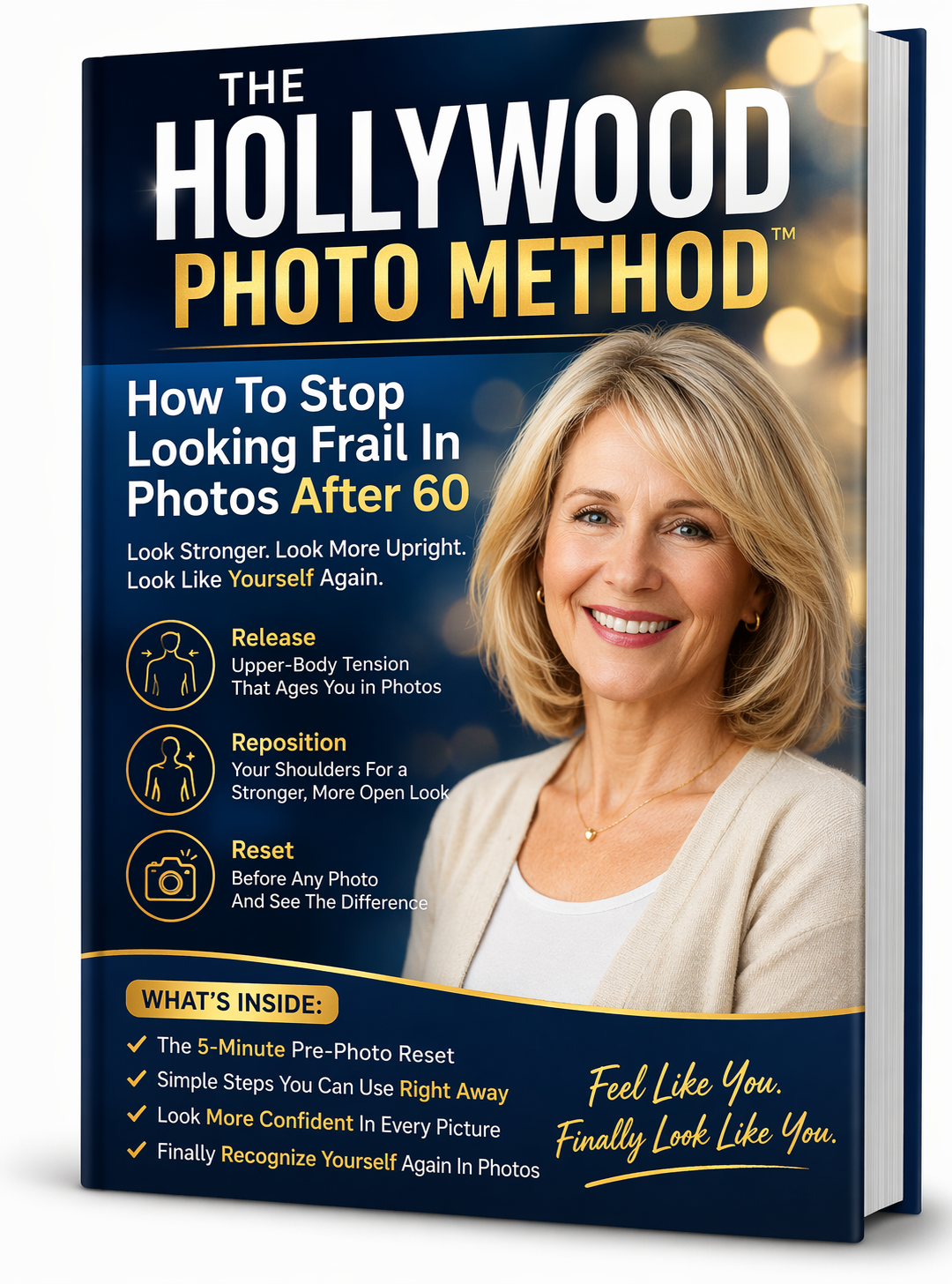
“How To Stop Looking Frail In Photos After 60”

The simple Hollywood Photo Method™ that helps you look stronger, more upright, and more like yourself again

If you’ve ever looked at a photo of yourself and thought,

“I don’t feel this old… so why do I look like that?”

It’s a strange feeling.

You still feel like yourself.

You’re still living your life. You’re still doing normal things. You don’t walk around thinking of yourself as frail.

And then someone takes a picture.

Suddenly you look smaller. More tired. More worn down. Maybe even weaker than you feel inside.

Most women assume that means it’s just age.

So they do what most people do. They blame the angle. They blame the camera. They blame the lighting. They try smiling differently. Standing differently. Dressing differently.

But the photos still don’t look right.

What most women don’t realize is that the “frail look” often doesn’t start with their face at all.

It usually starts higher up in the body.

Tiny changes in the way the shoulders sit. Tension in the upper body. The chest closing in a little. The neck shortening. The whole frame subtly collapsing inward over time.

In real life, movement softens a lot of that.

But a photo freezes it.

And the camera can make those small shifts look much bigger than they really are.

That’s why you can feel completely normal in the mirror… and then look at a candid photo and wonder who that woman is.

Why most women never fix it

Because they’re trying to solve it from the outside in.

They focus on makeup. Clothes. Weight. Better camera angles. Better expressions.

But they never address the subtle upper-body positioning that is quietly changing how they show up in pictures.

That’s the reason I put together the Hollywood Photo Method™.

Not to make women look fake. Not to make them pose like someone they’re not. And not to chase some impossible “look younger overnight” fantasy.

The point of this method is much simpler than that.

It helps you stop looking weaker, smaller, and more worn down than you really are.

It shows you how to reset the parts of your body that most strongly affect how you read on camera — so you look more open, more balanced, and more like yourself again.

What the method helps you do

  • Understand why photos can make you look frailer than you really are
  • Recognize the upper-body tension patterns that change how you appear on camera
  • Reset your shoulders and upper frame before a photo is taken
  • Look more upright and open without stiff “good posture” forcing
  • Stop looking so tired, collapsed, or closed off in candid pictures
  • Feel more confident the next time someone pulls out a camera

This isn’t about pretending to be someone else.

It’s about no longer feeling surprised or disappointed every time you see yourself in a photo.

It’s about finally seeing a version of yourself that actually matches how you still feel inside.

I didn’t figure this out right away

I went through the same cycle most people do.

I thought it was just bad photos at first.

Then I thought maybe it was lighting. Or angles. Or maybe I just needed to “try harder” to look better.

I even caught myself standing differently before pictures… forcing my posture… holding my breath… trying to “fix it” in the moment.

And somehow that made it worse.

Because it didn’t feel natural. And it didn’t actually change what the camera was picking up.

The shift that changed everything

The moment things started to change was when I stopped trying to fix the photo…

…and started fixing what the camera was actually seeing.

That’s the entire idea behind this.

Once you understand what’s really creating that “frail” look…

it becomes surprisingly simple to change it.

Not perfectly. Not dramatically. But enough that you finally stop feeling that disconnect when you see yourself in photos.

Inside the Hollywood Photo Method™, I walk you through:

  • The exact reason your body can look weaker on camera than it feels in real life
  • How subtle shoulder positioning quietly changes your entire appearance
  • The upper-body tension pattern that makes you look more tired than you are
  • A simple reset you can do in under a minute before any photo
  • Why “standing up straight” often backfires (and what works instead)
  • How to look more open and balanced without forcing anything
  • The small shift that helps you look more confident instantly
  • What makes some people naturally photograph better than others
  • How to stop overthinking every picture
  • And how to finally feel comfortable when someone pulls out a camera

This isn’t about trying to look younger.

It’s about not looking weaker, smaller, or more worn down than you actually are.

Why I made this simple

You don’t need a complicated system for this.

You don’t need to spend months fixing posture or learning how to pose like a model.

And you definitely don’t need to avoid photos altogether.

You just need to understand what actually makes the difference — and apply it in a simple, natural way.

Get Instant Access

The Hollywood Photo Method™

$19

Instant access. Simple to follow. No complicated steps.

If it doesn’t help you feel more confident seeing yourself in photos, you don’t have to keep it.

At the end of the day, this isn’t really about photos.

It’s about that moment when you see yourself and think,

“That actually looks like me.”

And not feeling like you have to hide from the camera anymore.